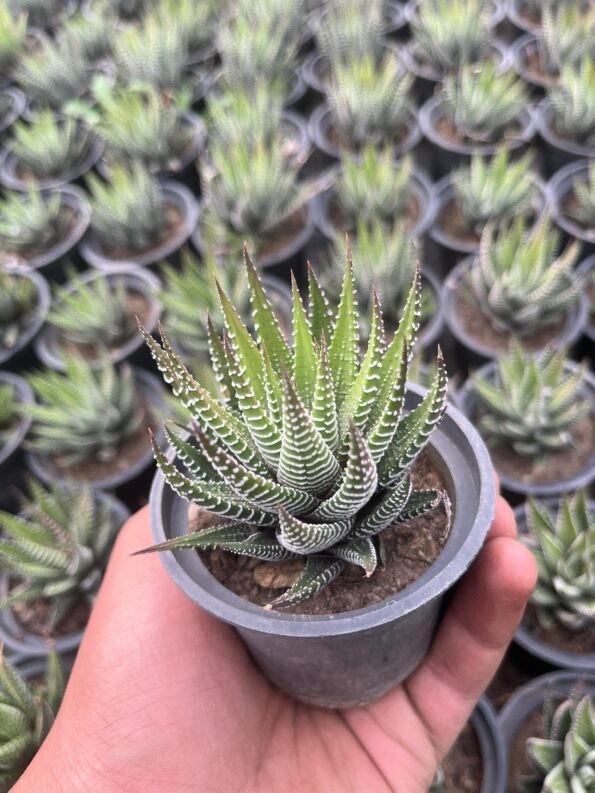
🌵 Have you ever stumbled upon a plant that looks like it’s straight out of a sci-fi movie? Meet the Zebra Haworthia, a mesmerizing succulent that’s taking the indoor gardening world by storm! With its striking white stripes against deep green leaves, this little gem is not just a pretty face – it’s a low-maintenance powerhouse that can thrive in even the most neglectful plant parent’s care.
But here’s the catch: while Zebra Haworthias are tough as nails, they’re also shrouded in mystery for many novice gardeners. How much water do they really need? What’s the secret to their propagation? And can they truly brighten up any corner of your home? If you’ve found yourself puzzled by these questions, you’re in the right place. In this blog post, we’ll unravel the enigma of the Zebra Haworthia, from understanding its unique characteristics to mastering its care and unlocking its full decorative potential. Get ready to become a Zebra Haworthia whisperer as we dive into the world of this fascinating succulent!
Zebra Haworthia: A Striking Succulent for Your Indoor Garden
The Zebra Haworthia, scientifically known as Haworthia fasciata, is a captivating succulent that has gained popularity among plant enthusiasts and indoor gardeners alike. This small, rosette-forming plant is native to South Africa and is prized for its distinctive appearance and low-maintenance nature.
Key Features of Zebra Haworthia
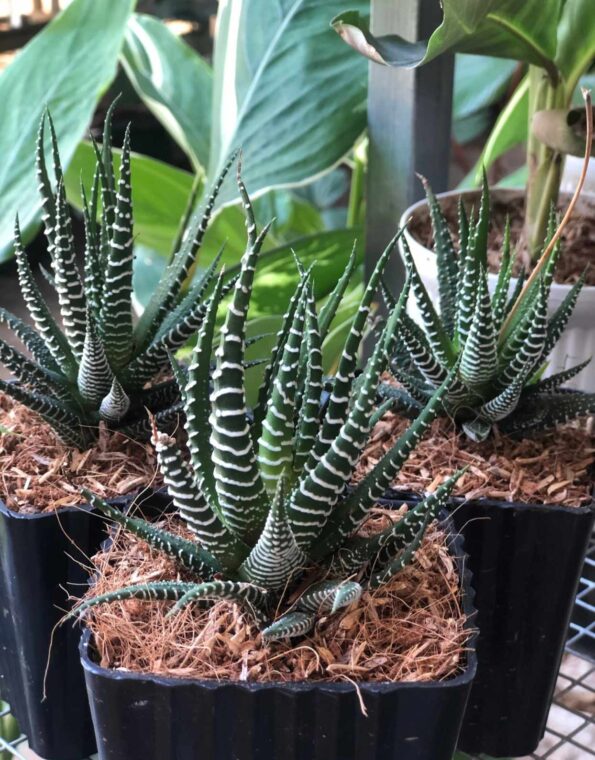
- Appearance: Striking white stripes on dark green leaves
- Size: Compact, typically growing 3-5 inches tall
- Growth habit: Forms tight rosettes
- Light requirements: Thrives in bright, indirect light
Why Choose Zebra Haworthia?
- Low maintenance
- Drought-tolerant
- Perfect for small spaces
- Unique decorative appeal
Comparison with Other Popular Succulents
| Feature | Zebra Haworthia | Aloe Vera | Echeveria |
|---|---|---|---|
| Size | Small | Medium to Large | Small to Medium |
| Light Needs | Indirect | Direct to Indirect | Direct |
| Water Needs | Low | Low | Low |
| Propagation Ease | Easy | Moderate | Easy |
| Toxicity | Non-toxic | Mildly toxic | Non-toxic |
As we delve deeper into the world of Zebra Haworthia, you’ll discover why this charming succulent has become a favorite among plant lovers and how it can enhance your indoor garden. Let’s explore the unique characteristics and care requirements of this fascinating plant.
Understanding Zebra Haworthia
Zebra Haworthia, scientifically known as Haworthia fasciata, is a captivating succulent that has gained immense popularity among plant enthusiasts and indoor gardeners alike. This small, charming plant is renowned for its unique appearance and low-maintenance nature, making it an ideal choice for both novice and experienced plant lovers. In this section, we’ll delve deep into the world of Zebra Haworthia, exploring its distinctive features, various varieties, and natural habitat.
Distinctive Features of Zebra Haworthia
The Zebra Haworthia, also known as the Zebra Plant or Zebra Cactus, is a striking succulent that stands out due to its remarkable characteristics. Let’s explore the key features that make this plant truly unique:
- Leaf Structure and Arrangement
- Rosette Formation: Zebra Haworthias grow in a compact rosette formation, typically reaching a height of 4-8 inches (10-20 cm).
- Triangular Leaves: The plant features thick, triangular-shaped leaves that grow upright and taper to a point.
- Leaf Texture: The leaves have a firm, fleshy texture, which allows them to store water efficiently.
- Distinctive Zebra-like Stripes
- White Tubercles: The most notable feature of the Zebra Haworthia is the presence of white, raised tubercles (wart-like growths) on the outer surface of the leaves.
- Striped Pattern: These tubercles form horizontal stripes across the leaves, resembling the pattern of a zebra’s coat.
- Inner Leaf Surface: In contrast to the striped outer surface, the inner surface of the leaves is typically smooth and green.
- Color Variations
- Base Color: The primary color of Zebra Haworthia leaves ranges from deep green to grayish-green.
- Stress Colors: Under certain conditions, such as intense sunlight or temperature fluctuations, the leaves may develop reddish or purplish hues.
- Flowering Characteristics
- Flower Stalk: Zebra Haworthias produce a thin, long flower stalk that can grow up to 12 inches (30 cm) in height.
- Flower Appearance: The flowers are small, tubular, and typically white or pale pink in color.
- Blooming Season: These plants usually bloom in late spring or early summer, although flowering is not guaranteed in indoor settings.
- Root System
- Shallow Roots: Zebra Haworthias have a relatively shallow root system, which is well-adapted to their natural habitat.
- Root Structure: The roots are fibrous and spread horizontally rather than growing deep into the soil.
- Growth Habit
- Slow Growth: Zebra Haworthias are known for their slow growth rate, which contributes to their compact size.
- Offsetting: They often produce offsets or “pups” around the base of the mother plant, forming small clusters over time.
- Adaptations for Water Conservation
- Thick Cuticle: The leaves have a thick, waxy cuticle that helps prevent water loss through transpiration.
- Stomata Distribution: The stomata (pores for gas exchange) are primarily located on the underside of the leaves, further reducing water loss.
To better understand the distinctive features of Zebra Haworthia, let’s compare it with some other common succulents:
| Feature | Zebra Haworthia | Aloe Vera | Echeveria |
|---|---|---|---|
| Leaf Shape | Triangular, pointed | Lance-shaped, thick | Flat, spoon-shaped rosettes |
| Striping Pattern | Horizontal white stripes | No stripes (some varieties may have spots) | No stripes (some may have colored edges) |
| Size | Small (4-8 inches tall) | Medium to large (up to 3 feet tall) | Small to medium (2-12 inches in diameter) |
| Flower Color | White or pale pink | Orange, yellow, or red | Pink, red, or orange |
| Growth Rate | Slow | Moderate | Moderate to fast |
| Water Storage | In leaves | In leaves and stem | In leaves |
Varieties of Zebra Haworthia
While Haworthia fasciata is commonly referred to as the Zebra Haworthia, there are several closely related species and cultivars within the Haworthia genus that share similar characteristics. Let’s explore some of the most popular varieties:
- Haworthia fasciata (Zebra Plant)
- This is the classic Zebra Haworthia, known for its distinctive white horizontal stripes on dark green leaves.
- The stripes are typically more prominent on the outer surface of the leaves.
- Haworthia attenuata (Zebra Haworthia)
- Often confused with H. fasciata, this variety has white tubercles on both the inner and outer surfaces of the leaves.
- The leaves tend to be slightly longer and more slender than those of H. fasciata.
- Haworthia coarctata (Compact Haworthia)
- This variety forms dense clusters of small, pointed leaves.
- The leaves are typically darker green with less prominent white markings.
- Haworthia reinwardtii (Zebra Wart)
- Features vertical rows of white tubercles rather than horizontal stripes.
- The leaves are arranged in a spiral pattern, giving the plant a more elongated appearance.
- Haworthia limifolia (Fairies Washboard)
- Known for its distinctive ridged leaves that resemble a washboard.
- The leaves are typically a uniform green color with minimal white markings.
- Haworthia margaritifera (Pearl Plant)
- This variety has raised white tubercles scattered across the leaf surface, resembling small pearls.
- The overall shape is more rounded compared to the typical Zebra Haworthia.
- Haworthia retusa (Star Window Plant)
- Features translucent “windows” at the tips of its leaves.
- The leaves are more triangular and arranged in a flatter rosette.
- Haworthia cooperi (Cooper’s Haworthia)
- Known for its translucent, balloon-like leaf tips.
- The leaves are typically light green and lack the distinctive zebra stripes.
- Haworthia cymbiformis (Cathedral Window Haworthia)
- This variety has translucent leaf tips that allow light to penetrate the plant.
- The leaves are broader and more spoon-shaped compared to other Haworthia species.
- Haworthia truncata (Horse’s Teeth)
- Features unique, squared-off leaf tips that resemble horse teeth.
- The leaves are typically grayish-green with minimal striping.
It’s worth noting that hybridization and selective breeding have resulted in numerous cultivars with unique characteristics, such as variegated patterns, different color variations, or altered leaf shapes. Some popular cultivars include:
- ‘Big Band’: Features wider, more prominent white stripes.
- ‘Chocolate’: Develops rich brown coloration under stress conditions.
- ‘Super White’: Exhibits exceptionally bright white stripes.
- ‘Concolor’: Has a uniform green color without prominent striping.
Natural Habitat and Origin
Understanding the natural habitat and origin of Zebra Haworthia provides valuable insights into its care requirements and adaptations. Let’s explore where these fascinating plants come from and the conditions they have evolved to thrive in:
- Geographic Origin
- Native Region: Zebra Haworthias are native to South Africa, specifically the Eastern Cape Province.
- Distribution: They are primarily found in the southern part of the country, from the Eastern Cape to the Western Cape.
- Climate Characteristics
- Rainfall: The natural habitat experiences relatively low annual rainfall, typically between 10-20 inches (250-500 mm) per year.
- Temperature: Average temperatures range from 60°F to 80°F (15°C to 27°C), with cooler winters and warmer summers.
- Sunlight: These plants are adapted to bright, indirect sunlight, often growing in partially shaded areas.
- Topography and Soil Conditions
- Terrain: Zebra Haworthias are often found growing on rocky outcrops, hillsides, and in small crevices.
- Soil Type: The natural soil is typically well-draining, composed of sandy or gravelly substrates.
- pH Levels: The soil in their native habitat tends to be slightly acidic to neutral, with pH levels ranging from 6.0 to 7.0.
- Ecological Niche
- Understory Plants: In their natural habitat, Zebra Haworthias often grow beneath larger shrubs or in the shade of rocks, receiving filtered sunlight.
- Adaptation to Drought: These plants have evolved to withstand prolonged periods of drought by storing water in their leaves and reducing water loss through specialized leaf structures.
- Symbiotic Relationships
- Pollinators: In their native environment, Zebra Haworthias are pollinated by various small insects, including bees and flies.
- Seed Dispersal: The small, light seeds are typically dispersed by wind, allowing the plants to colonize new areas.
- Conservation Status
- Wild Populations: While not currently listed as endangered, wild populations of Zebra Haworthia face threats from habitat loss and over-collection for the horticultural trade.
- Protected Areas: Some populations are protected within nature reserves and national parks in South Africa.
- Adaptations to Natural Habitat
- Leaf Structure: The thick, fleshy leaves and waxy cuticle help conserve water in the arid environment.
- Root System: The shallow, spreading root system allows the plant to quickly absorb water from infrequent rainfall events.
- Growth Pattern: The compact rosette form helps minimize water loss and protect the plant from intense sunlight.
Understanding the natural habitat of Zebra Haworthia is crucial for providing optimal care in cultivation. Here’s a comparison of their natural habitat conditions versus typical indoor growing conditions:
| Aspect | Natural Habitat | Indoor Growing Conditions |
|---|---|---|
| Light | Bright, indirect sunlight with some shade | Bright, indirect light or filtered sunlight |
| Temperature | 60°F to 80°F (15°C to 27°C) | 65°F to 75°F (18°C to 24°C) |
| Humidity | Generally low, with some seasonal variation | Low to moderate indoor humidity |
| Soil | Well-draining, sandy or gravelly | Well-draining succulent or cactus mix |
| Watering | Infrequent, dependent on seasonal rainfall | Infrequent, allowing soil to dry between waterings |
| Air Circulation | Good air movement in open habitats | Moderate air circulation indoors |
| Fertilization | Limited nutrients from natural soil | Occasional feeding with diluted succulent fertilizer |
By mimicking these natural conditions as closely as possible in indoor or cultivated settings, we can provide an optimal environment for Zebra Haworthias to thrive. This knowledge of their natural habitat also helps us understand why these plants are so well-suited to indoor cultivation, as they are naturally adapted to survive in conditions that are similar to many indoor environments.
As we conclude our exploration of Zebra Haworthia’s distinctive features, varieties, and natural habitat, we gain a deeper appreciation for these remarkable plants. Their unique adaptations and striking appearance make them not only fascinating subjects for study but also popular choices for indoor gardening and succulent collections. With this understanding of their origins and characteristics, we are better equipped to provide the care and conditions these plants need to flourish in our homes and gardens. In the next section, we’ll delve into the specific care requirements for Zebra Haworthia, building upon the knowledge we’ve gained about their natural habitat and unique features.